
Ozone Generators and Ozone Air Purifiers: Apples and Oranges
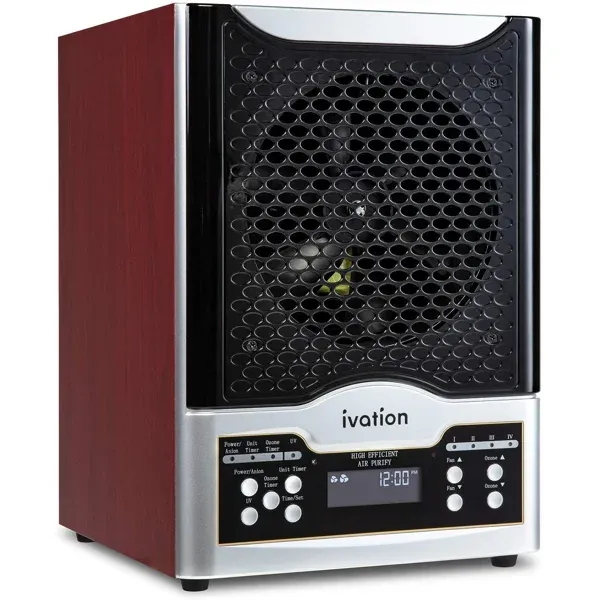
A comparison of tabletop ozone air purifiers, HEPA filtration, and high-output ozone generators
A Customer’s Question
A customer called recently and explained that two friends had recommended ozone generators to her. She lives in Texas and has mold issues. One friend recommended our 10-gram Large Room unit. Another had purchased a Mica plate ozone air purifier with a HEPA filter on Amazon and recommended that machine as well. I gave her the “skinny” on these types of machines, which I’ll share here.
Why Tabletop Air Purifiers May Not Reduce Airborne Particulates
Twenty-five years ago, when I was an Airpura representative with a showroom in Las Vegas, Nevada, I performed indoor air quality tests and sold testing kits and machines online. During that time, I became familiar with the Alpine and EcoQuest Mica plate ozone air purifiers.
These machines were sold through multilevel marketing channels and were often significantly overpriced, with some costing more than $1,000. I did not recommend them to my clients for several reasons.
First, they did not produce a significant—or even noticeable—reduction in airborne particulates through their HEPA feature. In my experience, tabletop air purifiers do not move enough air because their cubic feet per minute, or CFM, is too low. Using sensitive air-testing equipment, I could detect high particulate levels three feet from the machine. The only clean air was found two inches from the air outlet.
This was the same issue I observed with tabletop air cleaners generally. By contrast, the Airpura machines I sold drew air in from 360 degrees and moved a substantial volume of air. They were noisy when operated on high, but they worked.
A Whole-Home Filtration Approach
The best way to remove dead skin and dust from indoor air is to run the HVAC system fan in the “ON” position 24/7 and use a MERV 11 furnace filter. These filters are sold on eBay for about $6 each, or approximately $72 for a 12-pack.
Rather than relying on a tabletop HEPA unit, use a MERV 11 filter with an air handler that recycles all the air in the home twice an hour.
The Ozone Feature
At small concentrations, such as those created by these machines—around 400 milligrams per hour at most, despite advertisements claiming coverage of “up to 3,500 square feet”—ozone may freshen the air. However, these concentrations do not kill mold or provide beneficial ozone shock treatments in unoccupied spaces.
These machines are ozone air purifiers, not ozone generators. The 3-by-3-inch stainless-steel portion of the Mica plate creates nanoparticle-free ozone, unlike the ceramic plate units sold on Amazon, which are a health hazard. That aspect is beneficial, and the machines can give the air a fresh ozone smell.
However, ozone accumulates near ground level, and the concentration may harm pets’ lungs. Using one in a bedroom overnight may also harm human lungs. For that reason, we recommend ozone shock treatments only in unoccupied rooms, followed by our airing-out protocol. We strongly suggest you avoid ozone air purifiers. They can harm your lungs.
Ozone Generators for Unoccupied Areas
Both Alpine and EcoQuest went out of business years ago as litigation related to hospital visits by their customers accumulated over time.
Our 10-gram quartz tubes produce 10 grams of pure, nanoparticle-free ozone per hour using a protocol that provides them with a constant supply of fresh air. They create ozone concentrations of 10–20 parts per million, which kill mold, viruses, bacteria, and pathogens. These concentrations can also kill small insects and are used by green pesticide companies.
These units are used only in unoccupied areas, where no lungs are present. That is why they are effective for keeping critters from establishing themselves in attic or basement crawl spaces. Bats, rats, mice, and other animals cannot tolerate the ozone and must leave the area promptly because breathing becomes difficult in an ultra-high-ozone environment.
Conclusion
Even 400 milligrams of ozone per hour can raise the ozone concentration in a bedroom to 3–5 parts per million within an hour. Breathing those concentrations for several hours can harm the lungs.
So, what is the verdict on ozone air purifiers? Take a hard pass. Ozone air purifiers and high-output ozone generators are apples and oranges.