

I’ve written to Amazon several times over the past few years, frankly, posting about their ozone generator vendors’ false ozone output claims. Some pretty ridiculous ozone output numbers are being thrown around willy-nilly that not only hurt honest vendors, but also defraud the consumer.
Snapshot 1: August 2021, “11,000mg”
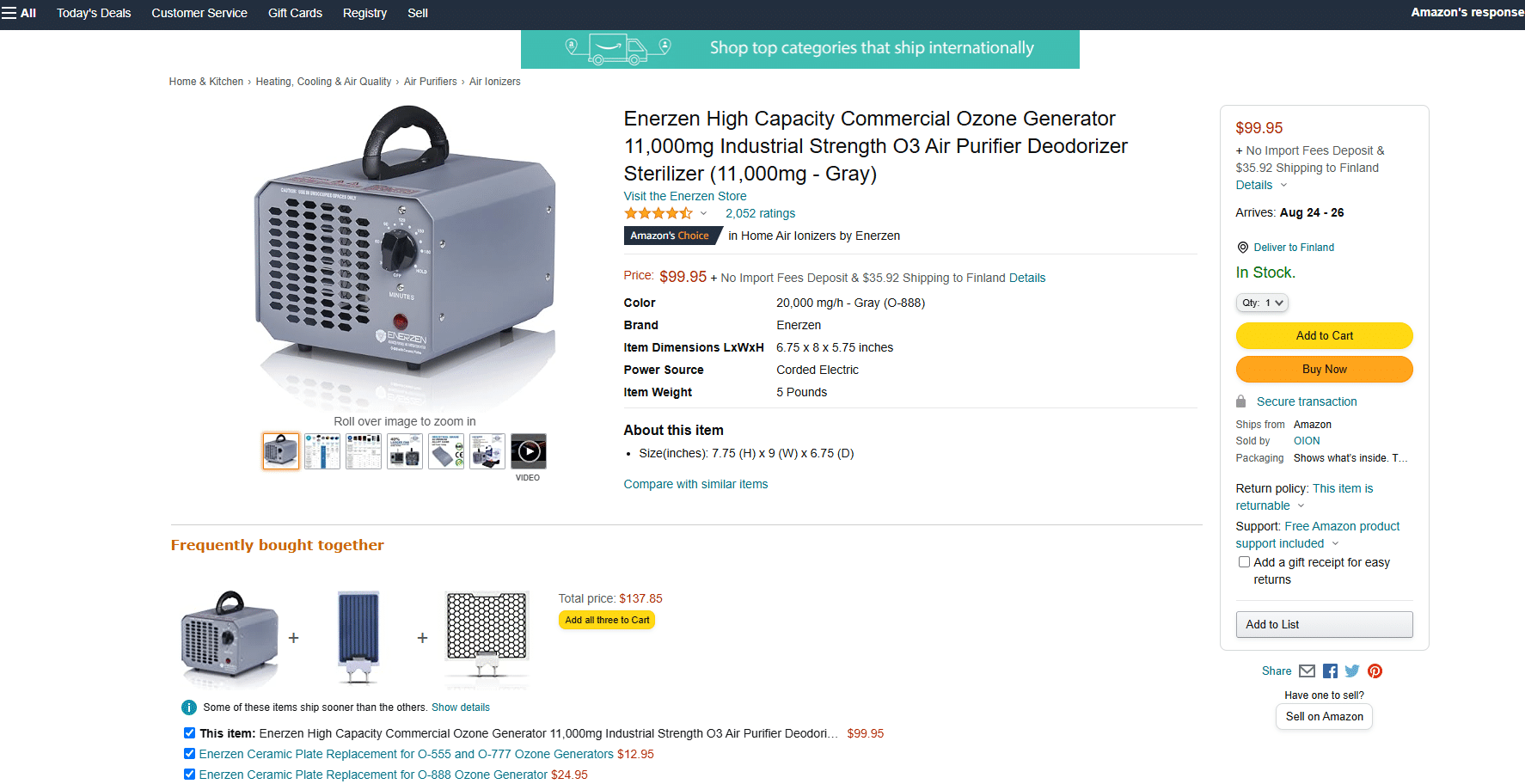
The address bar shows the archive date: 2021-08-10. The title says 11,000mg. The body is 6.75 x 8 x 5.75 inches and the unit weighs 5 pounds.
Snapshot 2: June 2022, “20,000 mg/h”
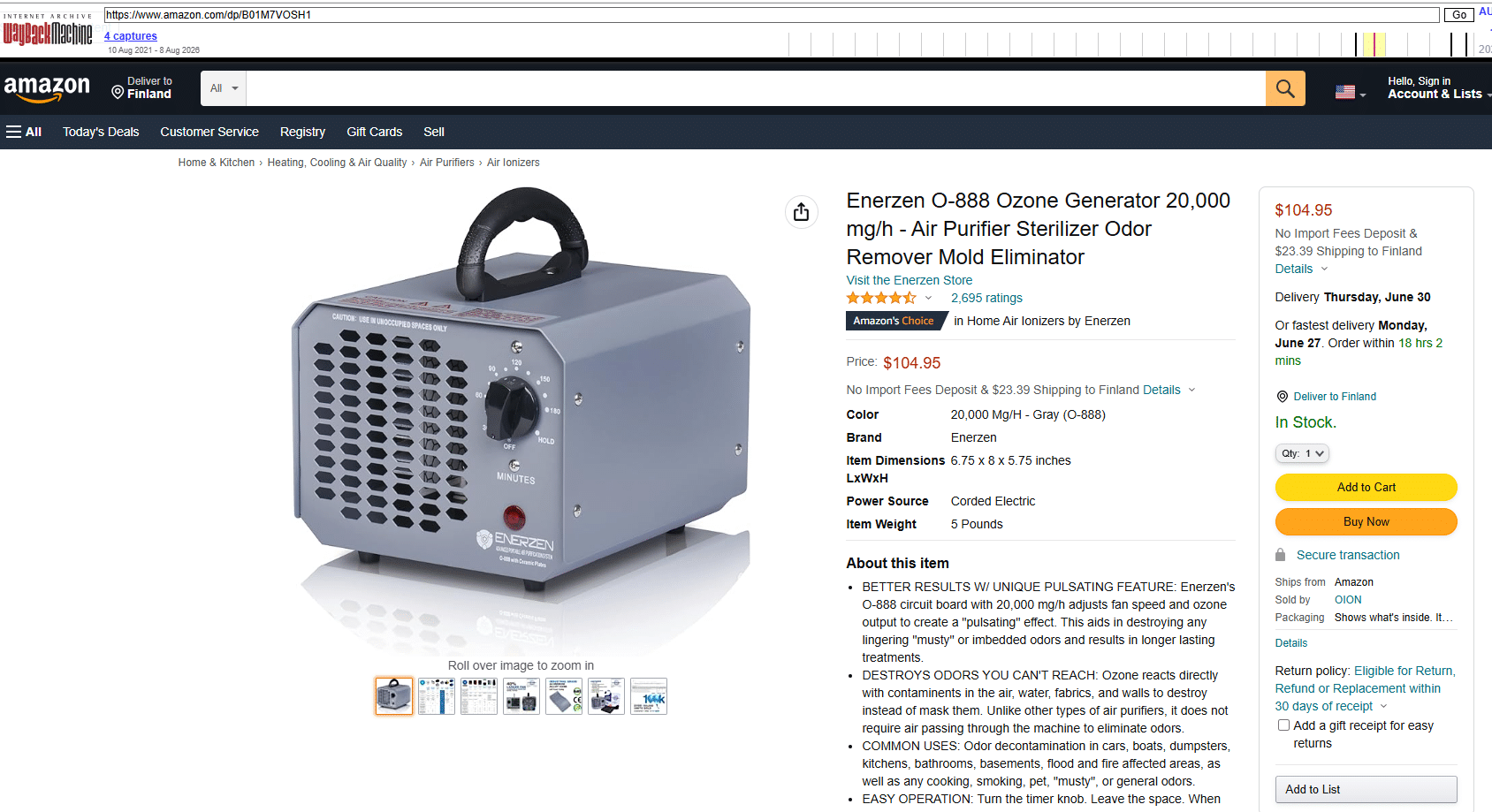
Ten months later, the same listing shows the same picture, the same 6.75 x 8 x 5.75 inch body and the same 5 pound weight. The title now says 20,000 mg/h.
Snapshot 3: December 2025, “70,000 mg/h”
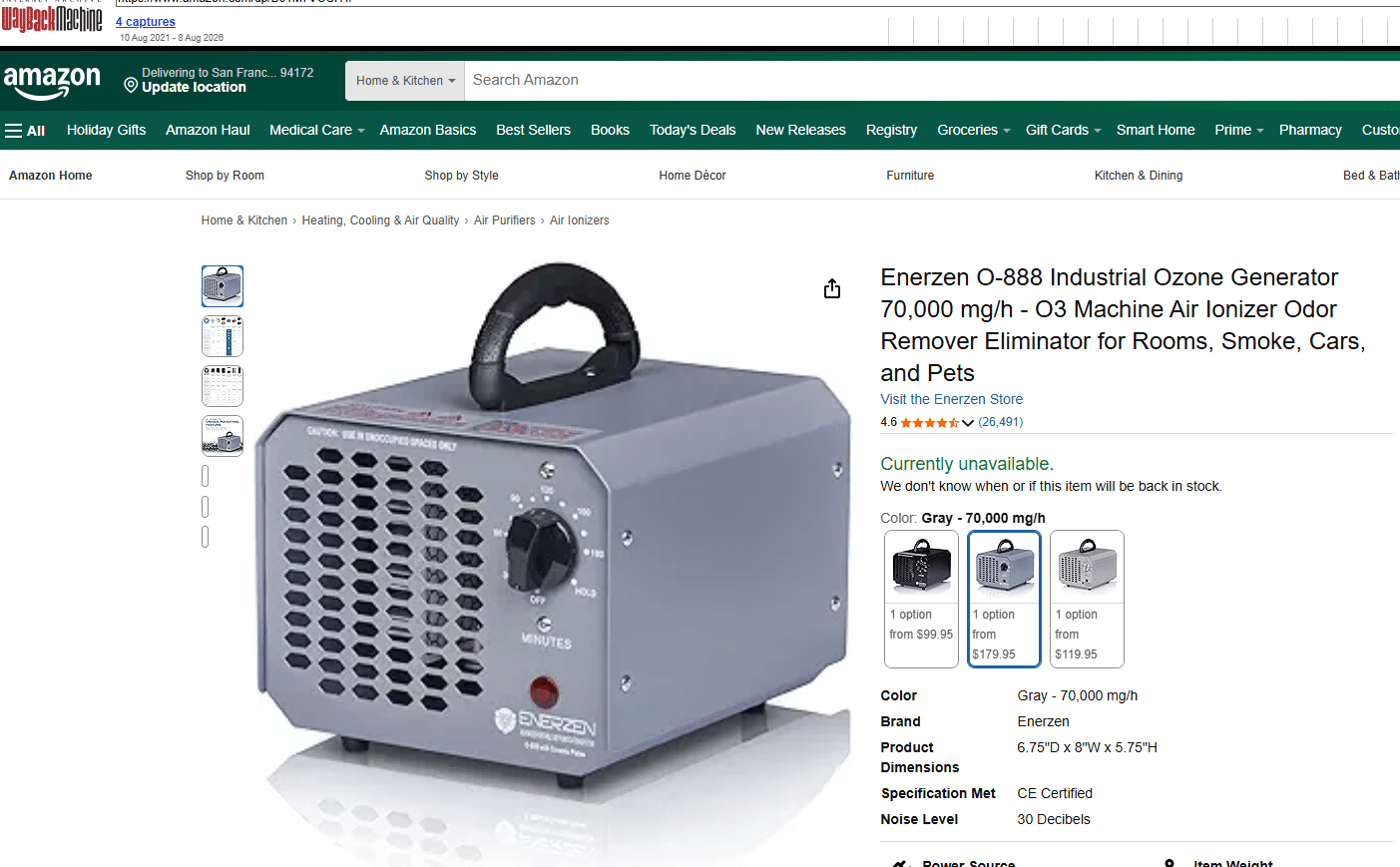
By December 2025 the title says 70,000 mg/h. The dimensions are still 6.75 x 8 x 5.75 inches, and the unit looks the same in the photos and uses the same 10g ozone plate. (They call it 11g for some reason)
Two details aren’t visible in this screenshot, but they’re in the source of the archived page: the unit is listed at 55 W, and the product description still says it produces 11,000mg. So in December 2025, the title on that page said 70,000 and the description on the same page said 11,000.
What changed, and what didn’t
Ozone output comes from the hardware: how much power goes in, and the size and number of the plates that make the ozone. In these snapshots the body is the same size, the photos show the same unit and the power rating is a modest 55 W. Nothing on the page shows a bigger motor, more plates or more power. The same 11g ozone plate.
The hardware didn’t change. Only the number in the title did, from 11,000 to 70,000, more than six times higher.
It isn’t just one listing. Listings claiming 100,000 and 120,000 mg/h began appearing on Amazon around October and November 2024, and by mid-2025 they were common. At least one model number appears under several different brand names, which suggests the same generic unit is being sold under more than one label. One of those listings even says, further down the page, that its “100,000mg” figure is the weight of the plates and that the actual output is 40,000 mg/h.
Does this make any sense to the average person with common sense? I don’t think so. What’s the saying. If it looks like a duck. And it walks like a duck. And it quacks like a duck. It’s a duck. What words come to mind when you read this?
How to check a listing yourself
You don’t have to take my word for any of this. Here’s what I’d look at:
1. Wattage. Find the power rating, usually in the specs or the description. Output needs power. If a small unit claims a huge number at a low wattage, ask how.
2. Plate count and size. Ask how many ozone plates the unit has and how big they are. Check whether the replacement plates sold for that model come with their own output rating, and compare it with the headline number.
3. Read the whole page. Compare the title with the description and the specs. If they disagree, believe the lower number until the seller explains.
4. Use the Wayback Machine. Go to web.archive.org, paste in the listing’s web address and look at the dated snapshots. If the output number went up over the years while the size, weight and wattage stayed the same, the machine didn’t change. Only the claim did.
Now I feel better. I’m glad I got that off my chest.
Archived Amazon listings reveal significant discrepancies in ozone output claims for the same ozone generator model, with reported outputs increasing from 11,000 mg/h to 70,000 mg/h, despite retaining identical physical dimensions and a consistent 55 W power rating. To verify these claims, one should examine the listing’s web address and access dated snapshots to determine if output numbers have inflated over time. This suggests that the machine itself has not undergone any modifications; rather, the marketing assertions have evolved.